For a first try, put a small portion of your dog's usual food in a suitable fillable toy. Keep the filling easy to reach, watch how your dog uses the toy, and count that food as part of their daily allowance. You do not need a complicated recipe to make mealtime more interesting.
Start with food your dog already knows
If the toy dispenses dry pieces, try a little of your dog's usual kibble. If its design holds a soft filling, you could use some of your dog's familiar wet dog food. Check the toy's instructions before filling it: a toy with an opening for dry food may not be appropriate for a wet mixture. Offer it when you can stay and observe, rather than packing it tightly or leaving a new toy with your dog unattended.
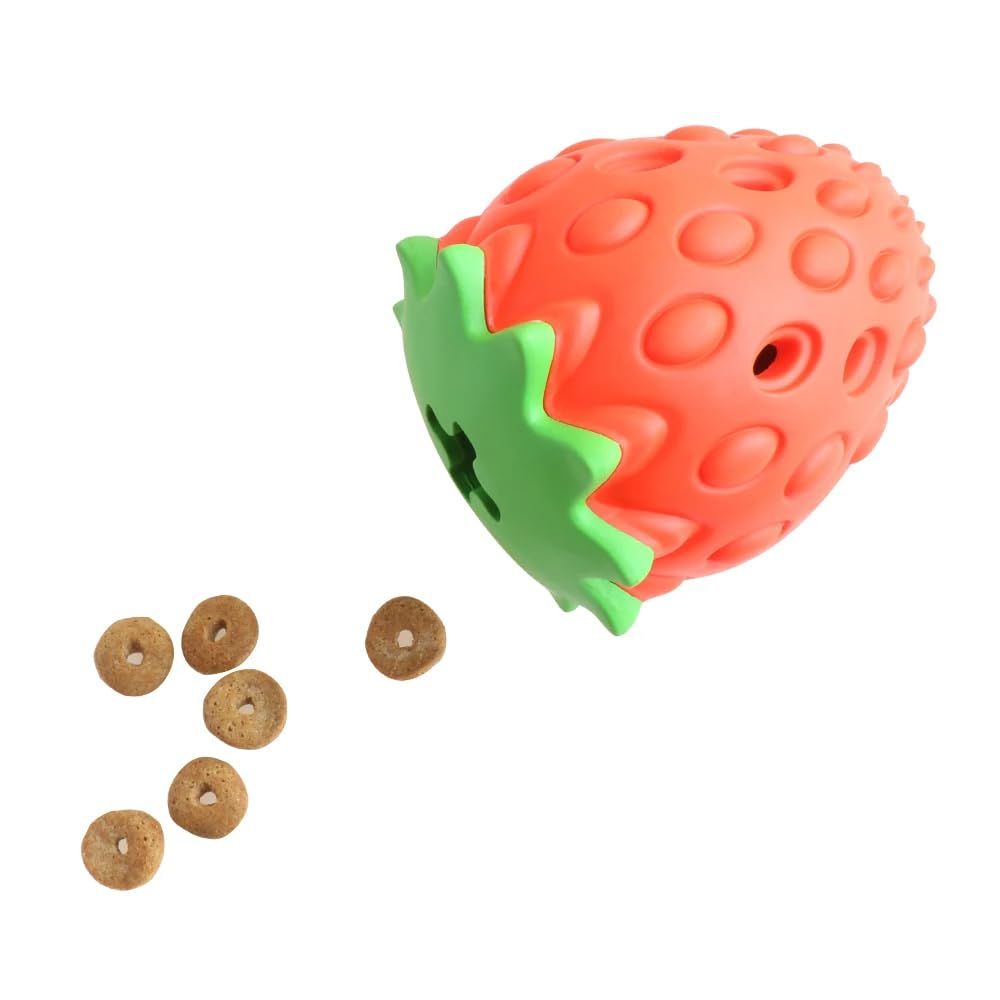
For example, the fillable strawberry dog toy is one option if its size, opening and construction suit your individual dog. Its listing describes it as fillable; that is not a promise that it will withstand every chewing style. Let your dog investigate and make sure they can get some food out without becoming frustrated.
What about peanut butter or other extras?
Familiar dog food is the simplest starting point. If you want to try a new ingredient, first check that it is suitable for your dog's diet and read the entire label, including sweeteners and seasonings. Never use peanut butter containing xylitol (also called birch sugar). Keep chocolate, grapes and raisins, onion, garlic and cooked bones out of the toy. If your dog has a prescribed diet, food allergy or other dietary restriction, ask your veterinarian before adding anything new.
Extra fillings can add more food than you realise. Set aside a portion from the day's usual meals instead of treating a filled toy as an unlimited bonus; ask your vet about portions if your dog has a weight-management plan. Do not assume a food toy will treat anxiety or replace exercise, company or veterinary care.
Make the first session easy and safe
- Check the toy for damage and choose a size that your dog cannot swallow. Follow its filling and cleaning instructions.
- Use a small amount of familiar food and leave it easy to access. If your dog is unsure, show them that food is inside without forcing them to interact.
- Supervise the session. If the toy breaks, your dog starts tearing off pieces or seems distressed, take it away safely and choose another activity. Separate pets during food-toy sessions if there is competition over food.
- When finished, remove leftover food and clean and dry the toy according to its instructions. Do not leave perishable fillings sitting inside.
If your dog suddenly refuses familiar food, appears painful when chewing or may have swallowed a toy fragment or unsafe ingredient, contact a veterinarian promptly. A fillable toy should be a manageable, enjoyable way to use part of a meal—not a test your dog has to pass.
Share this article