Choose a dog pee pad holder by measuring the pads you actually use, then checking the holder's stated pad capacity and the space available in your dog's toileting area. A holder may help contain a pad and give it a defined place, but it cannot make a pad absorb more or replace a consistent toileting routine.
Measure the pad before choosing a holder
Check the pad's width and length in the same units as the holder listing. Leave room to lay it flat within the holder rather than assuming that every pad labelled 'large' will fit. A pad that bunches, folds over the edge or sits partly outside the holder is a poor match. If you use a reusable pad, measure it as laid out and check that any raised edge does not force it to curl.
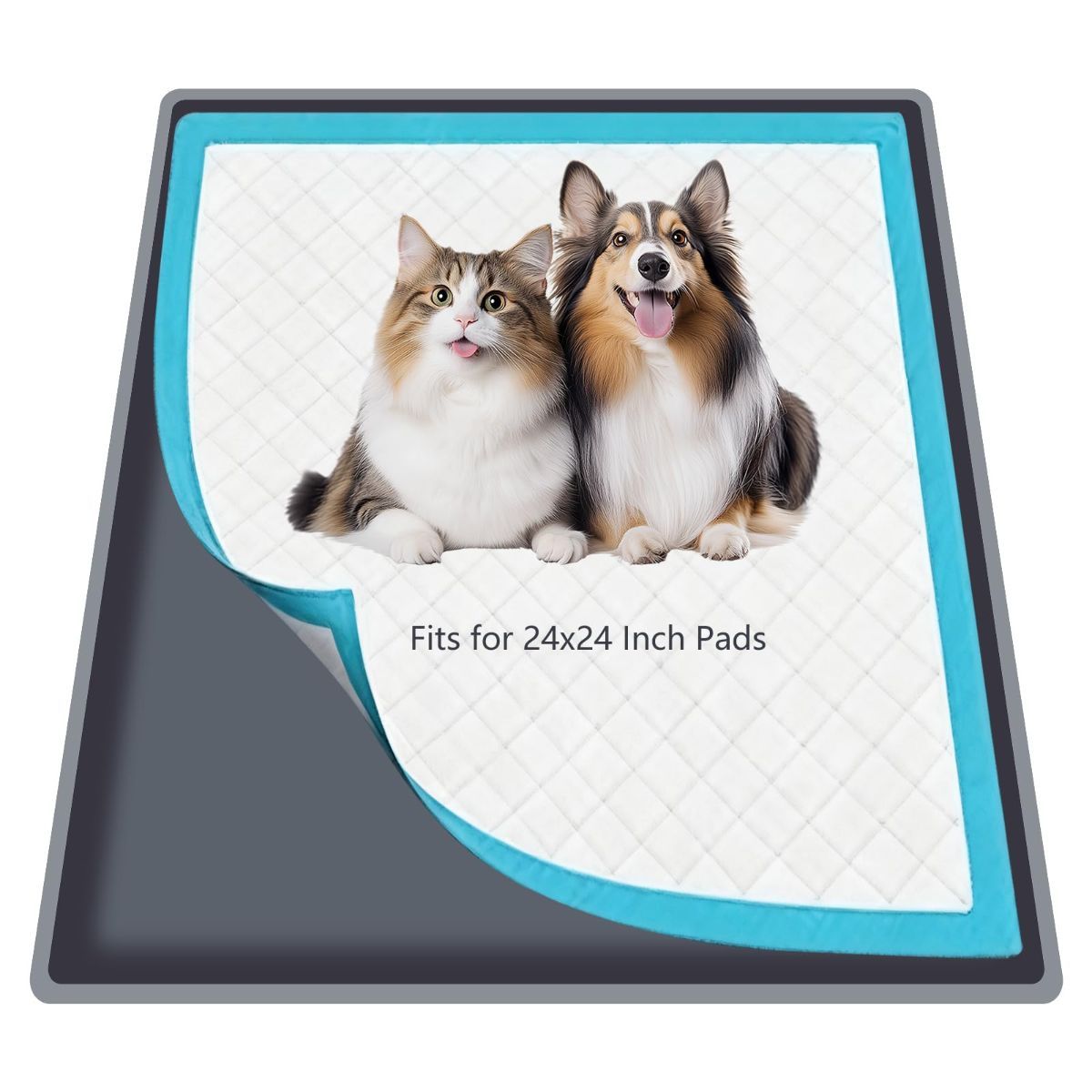
For example, the silicone holder listed for 24 x 24 inch pads is the smaller stated pad-size option; its listing describes raised edges and compatibility with disposable or reusable pads. The grey holder listed for pads up to 30 x 36 inches offers a different stated capacity and a wipe-clean silicone surface. Choose based on your actual pad and floor space, not the assumption that the larger holder is always better. These are holder listings, not included pads; check each listing for package contents before ordering.
Set up a usable toileting station
Put the holder on a level, accessible spot where it will not block a doorway or be easily kicked. Check that it lies flat and does not slide when your dog approaches. Keep the toileting spot separate from the dog's sleeping and feeding areas, and give the dog a clear route to it. If your dog hesitates at a raised edge, do not push them onto it; try a more accessible setup.
Keep the toileting location consistent while your dog is learning. Guide your dog to the chosen area when they show signs such as sniffing or circling, and reward toileting in the right place. Do not punish accidents. If your goal is outdoor toileting, a holder is only a way to manage an indoor pad, not a replacement for taking your dog outside and rewarding success there. Our guide to using and phasing out puppy pee pads covers that training decision in more detail.
Check and clean the station
Replace a soiled disposable pad or wash a reusable pad according to its care instructions. Lift the pad and check underneath and around the holder for moisture; wipe and dry the holder according to its instructions before putting a fresh pad down. Clean accidents on the surrounding floor thoroughly with a pet-appropriate non-ammonia cleaner. Inspect the holder regularly and stop using it if your dog chews or damages it.
If a previously toilet-trained dog suddenly starts having accidents, or toileting appears painful or unusually frequent, contact your veterinarian rather than assuming the holder or pad is the cause.
The right holder fits your existing pad, stays accessible and is easy to clean. If it does not suit your dog, adjust the setup rather than trying to force the dog to use it.
Share this article