Choose a dog door for the door you actually have, not just the size of your dog. A flap made for a flyscreen and a panel designed for a sliding glass doorway solve different installation problems. Before buying either, check the mounting surface, the dog's comfortable passage, the available space and where the opening leads.
First, check where the dog would go
A dog door should open only into an area you are comfortable letting your dog access. Walk the boundary of the yard and check fences, gates and potential gaps before considering unsupervised use. Think about shade, water, weather and whether other animals could enter. A lockable flap gives you a way to restrict access, but a lock is not a substitute for a secure yard or your usual care and supervision.
If your dog is likely to bolt, is distressed when alone or has not yet learned where to toilet, resolve that situation rather than expecting a flap to fix it. For a rental or strata property, check the permissions that apply before modifying a door or screen.
Flyscreen or sliding glass: which installation matches?
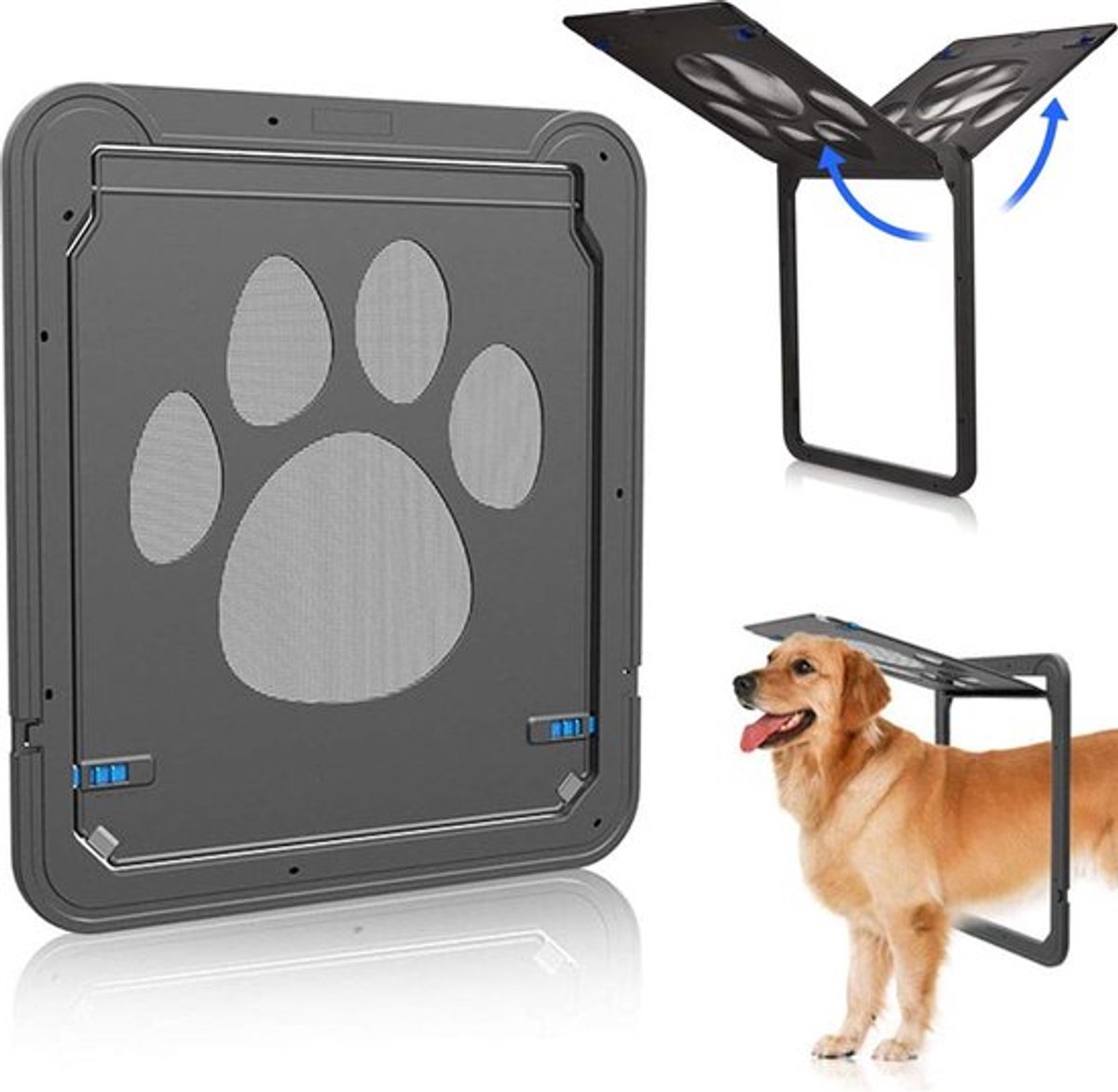
If you want an opening through an existing mesh screen, look for a flap specifically described for a screen door. The lockable dog flap for a screen door is listed for medium and large dogs. Its title gives 42 x 37 cm, but do not assume those are the clear passage dimensions: confirm the manufacturer's opening and cut-out measurements, screen compatibility and fitting instructions before cutting anything.
For a sliding glass doorway, a screen flap does not turn into a glass-panel solution. The adjustable-height sliding-glass dog door is listed for small dogs and has a locking flap. Check the listed panel height range against the actual doorway and the flap opening against your dog; also consider whether the remaining human doorway will be wide enough. Do not cut or drill glazing on the assumption that a particular panel will fit. Ask a qualified installer when glass, frame integrity or weather sealing is uncertain.
Measure the dog and the doorway separately
- Measure your dog at the widest part that must pass through the flap, and check the height they can step over comfortably. Allow room for natural movement rather than asking them to squeeze or jump.
- Measure the clear doorway, frame and installation area at more than one point. For a sliding panel, check track and doorway details against the seller's fitting instructions; for a screen flap, check the screen frame and cut-out area.
- Distinguish an item's outside dimensions from its usable flap opening and required cut-out. If the listing does not make these clear, get the measurements before ordering.
- Check how the flap locks and whether the setting is practical for the times you need to keep your dog indoors.
Introduce the flap without forcing it
Once installed securely, hold the flap open at first and let your dog investigate with you nearby. Reward a voluntary step through, then practise from both sides in short sessions. Let the flap rest lightly against them only after they are comfortable with the open passage. Never push a reluctant dog through or leave them outside to work it out alone.
The right choice is the one that fits the actual door and dog while keeping the destination appropriate. Check installation measurements and permissions first; then introduce the flap patiently, and continue providing exercise, company and routine care.
Share this article